.png)
Dr. Rashmi Ranjan Pattanayak Honoured with Rabindra Ratna Puraskar 2026 for Excellence in Critical Care and Emergency Medicine
- News Desk

- 2 hours ago
- 10 min read
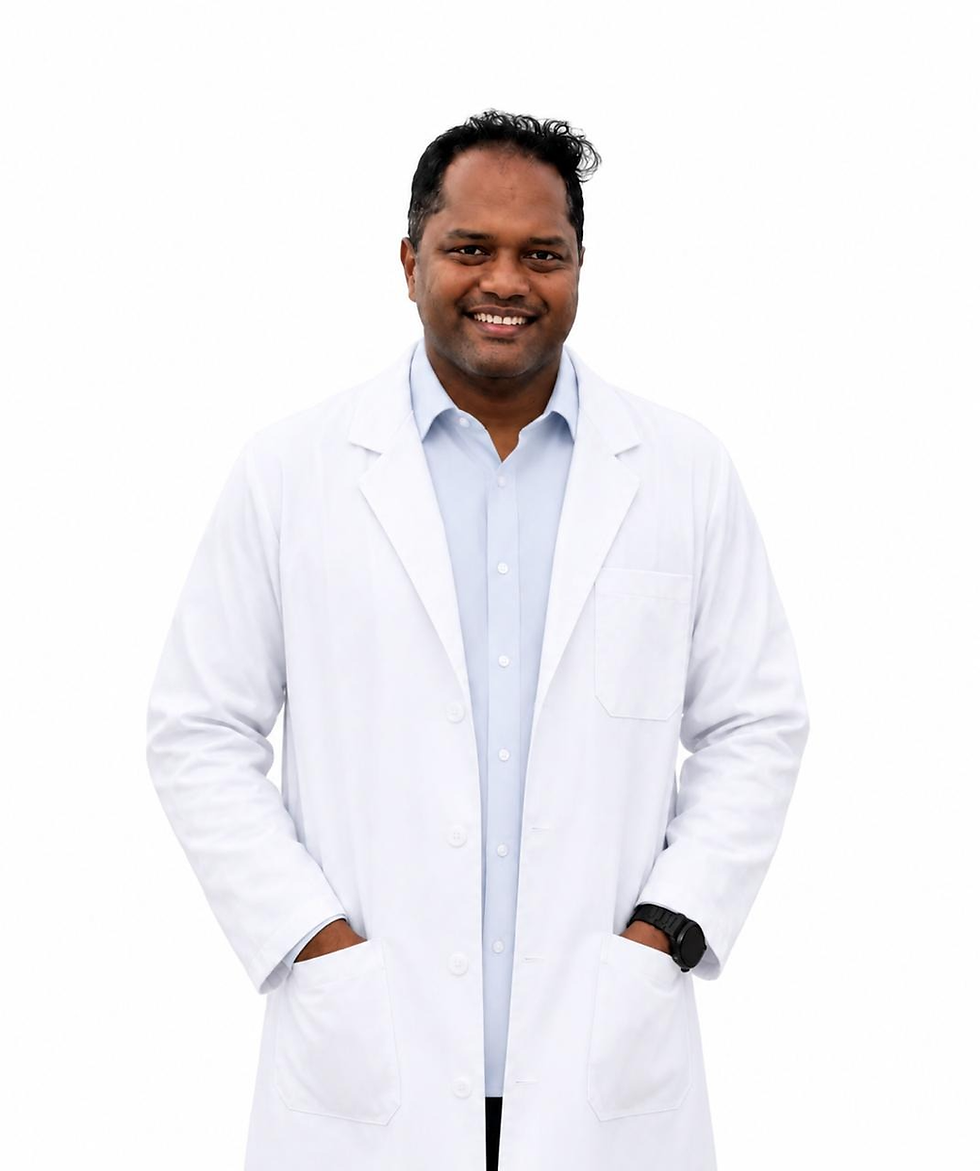
The Rabindra Ratna Puraskar 2026 recognises individuals whose professional commitment, specialised knowledge, and meaningful contribution to society reflect the values of excellence, service, and human welfare. Among the distinguished professionals being recognised this year is Dr. Rashmi Ranjan Pattanayak, a dedicated Critical Care Specialist from Odisha whose work in Critical Care and Emergency Medicine represents an important contribution to modern healthcare. Through his clinical practice, academic engagement, continuous professional development, and commitment to the management of critically ill patients, Dr. Pattanayak has established himself as a healthcare professional working at the demanding intersection of medical expertise, technology, teamwork, and compassionate patient care.
The recognition of Dr. Pattanayak with the Rabindra Ratna Puraskar 2026 in the category of Healthcare – Critical Care & Emergency Medicine highlights the importance of professionals who work in some of the most challenging areas of medicine. Critical care is a field in which decisions often have to be made within minutes, sometimes seconds, and where the condition of a patient can change rapidly. The work requires not only a comprehensive understanding of medicine but also the ability to interpret complex clinical information, coordinate multidisciplinary teams, use advanced technologies, and remain composed in high-pressure circumstances. Dr. Pattanayak’s professional journey reflects these qualities and demonstrates the significance of specialised critical care services in contemporary healthcare.
Currently serving as Consultant in Critical Care Medicine at Utkal Hospital Private Limited, Dr. Pattanayak has developed strong clinical expertise in the management of complex and high-acuity patients across multidisciplinary intensive care settings. His role places him at the centre of some of the most challenging clinical situations, where patients may require close monitoring, advanced organ support, emergency interventions, and coordinated care involving specialists from multiple medical disciplines.
Critical Care Medicine has evolved substantially over the past several decades. Intensive care units today depend on a combination of clinical judgment, advanced monitoring, imaging technologies, organ-support systems, infection-control strategies, and evidence-based protocols. A critical care specialist must therefore possess a broad understanding of different areas of medicine while maintaining the ability to focus on the immediate needs of a critically ill patient. Dr. Pattanayak’s clinical areas of proficiency demonstrate precisely this multidisciplinary approach.
One of his important areas of expertise is advanced hemodynamic management. Critically ill patients may experience profound disturbances in blood pressure, circulation, cardiac function, and tissue perfusion. Managing these conditions requires careful assessment and continuous monitoring. Hemodynamic management is not simply about maintaining a particular blood pressure value; it involves understanding the underlying cause of circulatory instability, evaluating cardiac performance and vascular status, and choosing appropriate interventions based on the individual patient’s condition. Dr. Pattanayak’s experience in this area contributes to the effective management of patients whose cardiovascular systems require intensive support.
Another important component of his clinical practice is antibiotic stewardship. Antimicrobial resistance has emerged as one of the major challenges facing healthcare systems worldwide. In intensive care environments, where patients may be particularly vulnerable to severe infections and may require broad-spectrum antimicrobial treatment, responsible antibiotic use is essential. Antibiotic stewardship involves ensuring that antimicrobial therapy is appropriately selected, correctly dosed, and used for an appropriate duration while avoiding unnecessary exposure. Dr. Pattanayak’s interest and training in combating antimicrobial resistance reflect his awareness of the wider implications of critical care medicine and the responsibility of physicians to protect both individual patients and the effectiveness of antimicrobial therapies for future generations.
His clinical proficiency also extends to infectious diseases, an area closely connected with intensive care medicine. Severe infections can affect multiple organ systems and may progress rapidly, requiring timely diagnosis, appropriate antimicrobial treatment, hemodynamic support, and careful monitoring. In the intensive care environment, managing infection often involves a combination of clinical assessment, laboratory investigations, imaging, microbiological data, and continuous evaluation of the patient's response to treatment. The ability to integrate these elements is central to effective critical care practice.
Dr. Pattanayak has also developed expertise in point-of-care ultrasound, commonly known as POCUS, and echocardiography. These technologies have become increasingly valuable in modern critical care because they allow clinicians to obtain important information rapidly at the bedside. In critically ill patients, conventional diagnostic processes may sometimes take valuable time. Bedside ultrasound can assist physicians in assessing cardiac function, fluid status, lung conditions, vascular structures, and other aspects of a patient's physiological state.
Echocardiography is particularly valuable in the assessment of critically ill patients with cardiovascular instability. It can provide information about cardiac contractility, chamber function, volume status, and other clinically relevant parameters. The ability to incorporate bedside imaging into clinical decision-making can help critical care specialists develop a more comprehensive understanding of a patient's condition. Dr. Pattanayak’s proficiency in POCUS and echocardiography therefore complements his broader expertise in hemodynamic management and advanced critical care.
Another specialised aspect of his clinical experience is perioperative management in liver transplant patients. Liver transplantation is among the most complex areas of modern medicine and requires highly coordinated care involving surgeons, anesthesiologists, intensivists, transplant specialists, nurses, technicians, and other healthcare professionals. The perioperative period can involve major physiological changes and requires meticulous monitoring and management.
Patients undergoing liver transplantation may face challenges involving circulation, coagulation, fluid balance, metabolic function, infection risk, and organ function. Critical care specialists play an essential role in supporting patients during this vulnerable period. Dr. Pattanayak’s experience in the perioperative management of liver transplant patients demonstrates his involvement in a highly specialised area of critical care where multidisciplinary coordination and advanced clinical decision-making are particularly important.
His expertise extends further into comprehensive organ support, including Continuous Renal Replacement Therapy (CRRT), Extracorporeal Membrane Oxygenation (ECMO), and Intra-Aortic Balloon Pump (IABP) support. These technologies represent some of the most advanced forms of supportive care available to critically ill patients.
CRRT is an important form of renal replacement therapy used particularly for critically ill patients who may not tolerate conventional intermittent dialysis. It allows for gradual and continuous removal of waste products and excess fluid while supporting patients with significant kidney dysfunction and hemodynamic instability. The use of CRRT requires close monitoring and an understanding of fluid balance, electrolyte management, anticoagulation, and the patient's overall clinical condition.
ECMO represents another highly advanced form of life support. It can provide temporary support to patients experiencing severe respiratory or cardiac failure when conventional treatments may not be sufficient. The management of patients receiving ECMO requires specialised knowledge, careful monitoring, and close coordination among members of a multidisciplinary team. Dr. Pattanayak’s experience with ECMO reflects his exposure to highly advanced critical care practices and his ability to work within complex organ-support systems.
Similarly, IABP support may be required in selected patients with serious cardiovascular compromise. The use of mechanical circulatory support demands detailed understanding of cardiovascular physiology and continuous patient assessment. Dr. Pattanayak’s clinical experience with IABP adds another dimension to his expertise in the management of critically ill cardiac patients.
His work with critically ill cardiac patients is particularly significant. Cardiac emergencies can develop rapidly and may require immediate assessment and intervention. Patients with severe cardiac conditions may simultaneously experience disturbances in circulation, respiratory function, kidney function, and other organ systems. Critical care specialists must therefore approach such cases from a whole-patient perspective rather than focusing exclusively on one organ.
Dr. Pattanayak also has substantial experience in managing critically ill neurological patients. Neurocritical care involves the management of patients with serious neurological conditions who may require intensive monitoring and support. Such patients can present with complex issues involving consciousness, airway protection, ventilation, intracranial pathology, circulation, and other physiological parameters. The care of these patients demands careful coordination between critical care and neurological or neurosurgical teams.
Post-cardiac arrest care is another important component of his clinical expertise. Survival following cardiac arrest does not represent the end of the medical challenge. Patients who regain circulation may remain critically ill and require intensive monitoring and support. The post-arrest period can involve complex neurological, cardiovascular, respiratory, and metabolic considerations. Appropriate critical care during this phase can play an important role in supporting recovery and addressing complications.
Beyond his clinical responsibilities, Dr. Pattanayak has demonstrated a clear commitment to continuous medical education and professional development. Medicine is an evolving discipline, and critical care is among the areas in which new technologies, treatment strategies, guidelines, and evidence continue to develop rapidly. A clinician working in this field must therefore maintain a commitment to lifelong learning.
Dr. Pattanayak has earned recognition in national and state-level critical care quiz competitions, reflecting his engagement with academic learning and his knowledge of critical care medicine. Participation in such academic activities encourages clinicians to remain updated with current concepts, clinical guidelines, emerging therapies, and developments in intensive care practice.
His professional development has also included certification in bronchoscopy in ICU practice. Bronchoscopy can have important diagnostic and therapeutic applications in critically ill patients, particularly those with complex respiratory conditions. Its use in intensive care requires technical skill, careful patient selection, appropriate preparation, and awareness of potential complications. Training in this area adds to the range of procedures and clinical capabilities available to a critical care specialist.
Dr. Pattanayak has additionally participated in Fundamental Critical Care Support through the Society of Critical Care Medicine (SCCM). Fundamental critical care education is designed to strengthen knowledge and skills relevant to the management of patients who may require intensive care. Participation in such programmes reflects a commitment to structured learning and the continued refinement of clinical competencies.
His engagement with the Indian Society of Critical Care Medicine (ISCCM) course on combating antimicrobial resistance is another indication of his professional interest in one of the most pressing challenges in contemporary healthcare. Antimicrobial resistance requires a collective response involving physicians, hospitals, microbiologists, pharmacists, policymakers, researchers, and patients. Critical care professionals have a particularly important role because intensive care units frequently deal with severe infections and vulnerable patient populations. Dr. Pattanayak’s educational involvement in this area demonstrates his awareness of the need to combine advanced treatment with responsible antimicrobial practices.
Academic conferences also form an important part of his professional development. Dr. Pattanayak regularly attends national and state-level academic conferences, reflecting his interest in teaching, knowledge exchange, and advancement in critical care medicine. Conferences provide healthcare professionals with opportunities to interact with peers, learn about emerging evidence, discuss difficult clinical cases, and understand evolving approaches to patient care.
This interest in teaching is particularly relevant to the future of healthcare. Medicine cannot progress through individual clinical practice alone. The development of competent healthcare systems depends on the continuous education of students, residents, nurses, technicians, and fellow clinicians. Experienced specialists have a responsibility to share knowledge and encourage younger professionals to adopt evidence-based and ethical approaches to patient care. Dr. Pattanayak’s engagement with academic activities reflects this broader educational dimension of his professional identity.
The recognition of Dr. Rashmi Ranjan Pattanayak through the Rabindra Ratna Puraskar 2026 can therefore be viewed not merely as an acknowledgement of a medical position, but as recognition of a comprehensive professional approach to critical care. His work combines clinical expertise with advanced technology, academic development, multidisciplinary collaboration, and a commitment to continuous learning.
Critical care medicine is often described through machines, procedures, and clinical interventions, but at its heart remains the patient. Behind every critical illness is an individual and a family facing uncertainty and anxiety. The intensive care environment can be physically and emotionally demanding for patients and their loved ones. Effective critical care therefore requires not only technical competence but also communication, empathy, patience, and respect for human dignity.
The role of a critical care specialist is consequently multifaceted. The physician must interpret complex medical information, make timely decisions, coordinate with specialists, manage advanced organ-support systems, monitor changing physiological parameters, and communicate effectively with families. These responsibilities require a balance between scientific knowledge and human sensitivity.
Dr. Pattanayak’s professional profile reflects the increasing sophistication of critical care medicine in Odisha and India. The availability of specialists with experience in advanced hemodynamic management, POCUS, echocardiography, CRRT, ECMO, IABP, transplant-related intensive care, infectious diseases, and post-cardiac arrest care is an important part of the development of advanced healthcare services.
Odisha has witnessed considerable growth in healthcare infrastructure and specialised medical services over the years. Within this changing healthcare environment, specialists working in critical care play an essential role in improving the capacity of hospitals to manage emergencies and complex illnesses. The expertise developed by professionals such as Dr. Pattanayak contributes to the broader objective of providing patients with access to advanced medical care closer to home.
The Rabindra Ratna Puraskar 2026 honour also brings attention to the importance of recognising healthcare professionals whose contributions may often take place away from public attention. Unlike fields where achievements can be immediately visible, the work of a critical care specialist frequently takes place within intensive care units, emergency departments, procedure rooms, and hospital wards. It involves difficult decisions, continuous monitoring, long hours, teamwork, and responsibility for patients in their most vulnerable condition.
Dr. Rashmi Ranjan Pattanayak’s journey demonstrates how specialised medical knowledge can be combined with continuous education to serve patients more effectively. His expertise across critical care, emergency medicine, cardiovascular and neurological critical illness, infection management, advanced imaging, organ support, transplantation-related care, and post-cardiac arrest management illustrates the breadth of contemporary intensive care practice.
His commitment to professional development is equally noteworthy. From critical care quiz competitions and bronchoscopy certification to participation in Fundamental Critical Care Support and antimicrobial resistance education, his academic activities reflect a willingness to continually expand his knowledge and skills. Regular participation in conferences further strengthens his engagement with the evolving medical community.
The Rabindra Ratna Puraskar 2026 thus recognises a healthcare professional whose work is grounded in specialised clinical practice and an ongoing commitment to learning. Dr. Pattanayak represents a generation of medical professionals for whom healthcare is not a static profession but a lifelong process of education, adaptation, collaboration, and service.
As medicine continues to advance, critical care will remain one of the most important areas of healthcare. Emerging technologies such as extracorporeal support, advanced bedside imaging, precision antimicrobial therapy, improved monitoring systems, and sophisticated organ-support strategies are changing the way critically ill patients are treated. At the same time, the fundamental values of medicine—timely care, clinical responsibility, compassion, ethical decision-making, and respect for human life—remain unchanged.
Dr. Rashmi Ranjan Pattanayak’s professional profile reflects this balance between modern medical technology and the enduring human purpose of healthcare. His work as a Consultant in Critical Care Medicine at Utkal Hospital Private Limited, together with his expertise in complex intensive care management and his commitment to continuous professional education, represents a meaningful contribution to the healthcare sector in Odisha.
The Rabindra Ratna Puraskar 2026 serves as a recognition of this contribution. It celebrates not only the knowledge required to manage critically ill patients but also the dedication required to remain current in a rapidly changing medical field. Through his clinical expertise, academic participation, and commitment to advanced critical care practice, Dr. Pattanayak continues to contribute to the strengthening of specialised healthcare.
His recognition is therefore significant in highlighting the vital role played by critical care professionals in modern medicine. It acknowledges the expertise required to manage patients at the edge of physiological crisis, the importance of multidisciplinary teamwork, and the necessity of lifelong learning in healthcare. More broadly, it reinforces the value of recognising professionals who dedicate their careers to improving patient care through knowledge, skill, responsibility, and service.
With the Rabindra Ratna Puraskar 2026, Dr. Rashmi Ranjan Pattanayak joins a distinguished group of professionals recognised for meaningful contributions to their respective fields. His recognition in Healthcare – Critical Care & Emergency Medicine reflects a career shaped by specialised clinical knowledge, advanced critical care skills, academic engagement, and a sustained commitment to professional excellence.
As the healthcare sector continues to evolve, the contribution of dedicated critical care specialists will remain indispensable. Professionals like Dr. Pattanayak demonstrate the importance of combining medical expertise with continuous learning and a patient-centred approach. His work stands as an example of the demanding yet essential role of critical care medicine and the responsibility of healthcare professionals to continually improve the quality, safety, and effectiveness of care provided to those who need it most.
The Rabindra Ratna Puraskar 2026 is therefore a fitting occasion to acknowledge Dr. Rashmi Ranjan Pattanayak’s contribution to Critical Care and Emergency Medicine and his continuing pursuit of knowledge and clinical excellence. His professional journey illustrates the significance of specialised healthcare, advanced medical education, and dedicated service, while his work contributes to the broader advancement of critical care medicine in Odisha and beyond.